Enretto | Digital Business Solutions

Blog

Your blog category

Blog

How Chatbots Improve Customer Support and Lead Generation

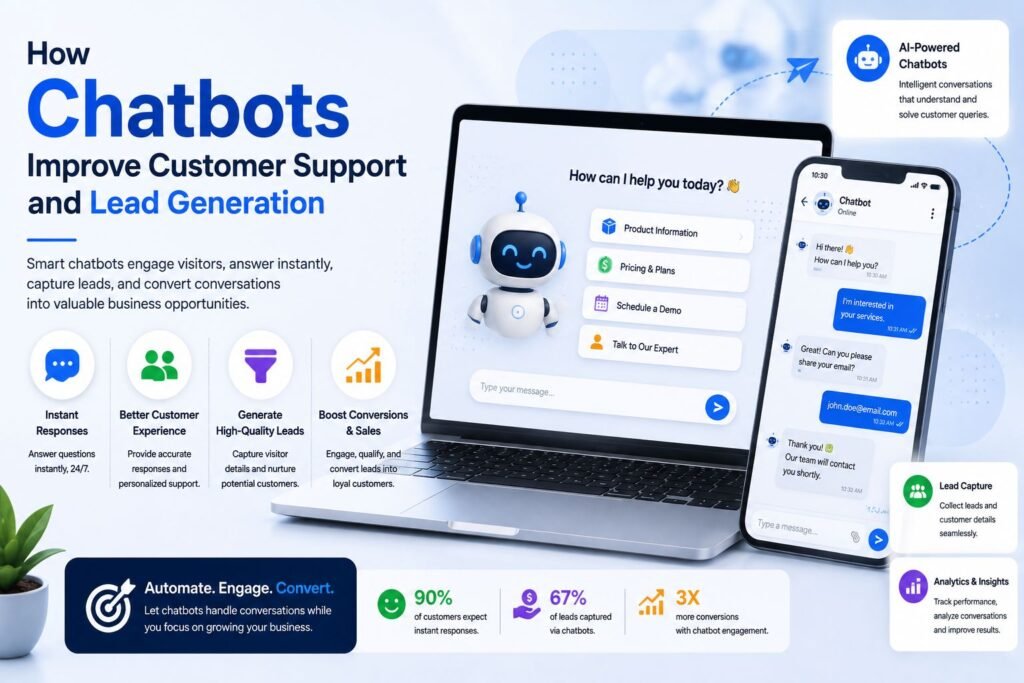
In today’s competitive digital environment, customers expect businesses to provide quick, convenient, and reliable support. When visitors have to wait too long for answers, they may leave a website or choose a competitor instead. At the same time, businesses need effective ways to identify potential customers and turn website visitors into valuable leads. Chatbots can help solve both challenges by combining automated customer support with lead-generation capabilities. They can interact with visitors, answer common questions, collect information, recommend services, and guide potential customers toward the next step. 1. Provide Instant Customer Support One of the biggest advantages of chatbots is their ability to respond instantly. Customers do not always want to wait for business hours or for a support representative to become available. A chatbot can answer frequently asked questions, provide basic information, explain services, and guide users through common processes. This gives visitors immediate assistance and creates a smoother customer experience. 2. Offer 24/7 Availability Traditional customer support teams generally operate during specific working hours. However, website visitors can arrive at any time. A chatbot can remain available 24/7, allowing customers to ask questions and receive automated responses even outside business hours. This ensures that businesses do not completely miss potential enquiries simply because their team is unavailable. 3. Reduce Repetitive Support Work Customer support teams often spend a significant amount of time answering the same questions repeatedly. Questions about pricing, services, availability, operating hours, policies, and basic procedures are common across many businesses. Chatbots can handle these repetitive queries automatically. This allows support employees to focus on more complex issues that require human attention. 4. Improve Website Engagement A visitor may enter a website, look at a few pages, and leave without taking any action. A chatbot can proactively engage with visitors and encourage them to interact with the business. For example, a chatbot can ask whether the visitor needs help finding a service, wants pricing information, or would like to speak with a representative. This can turn passive website visitors into active conversations. 5. Capture Valuable Leads Chatbots can be used as an automated lead-generation tool. Instead of simply displaying a contact form, a chatbot can have a natural conversation with visitors and collect relevant information. Depending on the business, it can ask for details such as: The collected information can then be passed to the sales team for follow-up. 6. Qualify Potential Customers Not every website visitor is ready to become a customer. Sales teams can waste time following up with people who are not genuinely interested. A chatbot can ask qualifying questions before sending a lead to the sales team. It can identify what the visitor is looking for, understand their requirements, and determine whether they are a suitable prospect. This helps sales teams prioritize high-quality leads and use their time more efficiently. 7. Guide Customers Toward the Right Service Businesses often offer multiple products or services, and visitors may not always know which option is right for them. A chatbot can ask questions about the customer’s requirements and recommend relevant services or products. It can also direct users to specific pages, pricing information, booking forms, or contact options. This creates a more personalized experience while helping customers find what they need faster. 8. Support Sales and Conversions A chatbot can assist customers throughout the buying journey. It can answer questions about products, explain features, provide basic pricing information, and help customers move toward a purchase or enquiry. For businesses offering appointments or consultations, chatbots can also help visitors schedule meetings or request a callback. By reducing friction between interest and action, chatbots can contribute to higher conversion opportunities. 9. Integrate With Business Systems Modern chatbot solutions can be connected with CRM systems, websites, WhatsApp, email platforms, booking systems, and other business tools. For example, when a visitor submits information through a chatbot, the details can automatically be stored in a CRM. A notification can then be sent to the sales team for follow-up. Such integrations reduce manual data entry and help businesses create more efficient workflows. 10. Deliver Personalized Conversations A chatbot does not have to provide the exact same response to every visitor. With the right setup and access to relevant information, it can provide responses based on user inputs and conversation history. Personalized interactions can make customers feel better understood and can help businesses recommend more relevant products or services. 11. Provide Insights Into Customer Needs Chatbot conversations can also provide businesses with useful insights. By reviewing common questions, customer preferences, and frequently requested services, businesses can identify what their audience actually needs. These insights can help improve website content, marketing campaigns, product offerings, and customer support processes. For example, if many visitors repeatedly ask about a particular service that is difficult to find on the website, the business can improve its service page or navigation. 12. Combine Automation With Human Support Chatbots are not designed to replace every human interaction. Instead, they can work alongside customer support and sales teams. Simple questions can be handled automatically, while complex or sensitive issues can be transferred to a human representative. This creates a balance between automation and personalized support. Businesses can therefore provide faster assistance without removing the human element from customer service. Conclusion Chatbots have become an important digital tool for businesses looking to improve customer support and generate more leads. They can provide instant responses, remain available 24/7, automate repetitive conversations, capture customer information, qualify leads, and guide visitors toward the right products or services. When integrated with CRM systems, websites, WhatsApp, and other business tools, chatbots can become an important part of a company’s overall communication and sales strategy. The goal is not simply to automate conversations. A well-designed chatbot should make it easier for customers to get answers, easier for businesses to capture opportunities, and easier for teams to focus on conversations that matter most.
Blog

Why Every Business Needs a Professional Website

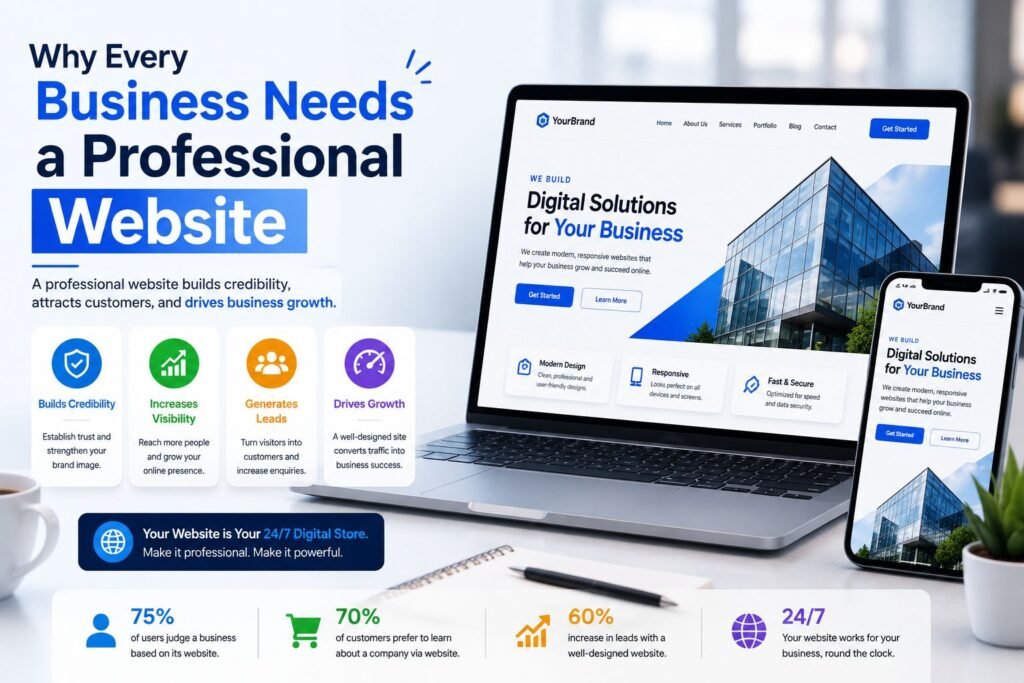
In today’s digital world, a business’s online presence plays an important role in how customers discover, evaluate, and interact with a brand. Whether it is a small local business, a growing startup, or an established company, having a professional website has become an essential part of building credibility and reaching potential customers. A website is more than an online business card. When designed and developed properly, it can become a powerful platform for showcasing products and services, generating enquiries, building trust, and supporting long-term business growth. 1. Builds Business Credibility One of the first things potential customers often do when they discover a business is search for it online. A professional website gives customers a central place to learn about the company, its services, experience, and offerings. A well-designed website with clear information, professional visuals, and easy navigation can create a stronger first impression. It shows that the business takes its online presence seriously and gives visitors more confidence when considering its products or services. 2. Establishes a Strong Online Presence Customers increasingly use search engines and online platforms to find businesses. Without a website, a company may miss opportunities to reach people who are actively looking for its services. A website provides a dedicated digital presence where businesses can showcase what they offer and make important information available at any time. It also gives the brand greater control over how its products, services, and identity are presented online. 3. Helps Generate More Leads A professional website can work as an effective lead-generation tool. Instead of simply displaying information, it can guide visitors toward taking action. Contact forms, enquiry buttons, service pages, booking options, WhatsApp integration, and clear calls-to-action can encourage visitors to connect with the business. For example, someone searching for a particular service can visit the website, understand the offering, review important details, and submit an enquiry without needing to visit a physical office. 4. Works 24/7 Unlike a physical office that operates during specific hours, a website is available around the clock. Customers can explore services, read information, view products, submit enquiries, or request additional information whenever it is convenient for them. This makes a website a valuable digital asset that continues working for the business even outside normal working hours. 5. Showcases Products and Services A website provides enough space to properly explain what a business offers. Instead of relying only on short social media posts or advertisements, companies can create dedicated pages for each product or service. Businesses can include descriptions, images, features, pricing information, FAQs, case studies, testimonials, and other useful details. This helps potential customers understand the offering before making a decision. 6. Improves Customer Experience A good website should make it easy for visitors to find the information they need. Clear navigation, responsive design, fast loading times, readable content, and straightforward contact options all contribute to a better user experience. A website that works properly across mobile phones, tablets, and computers allows customers to interact with the business from almost any device. A better experience can increase engagement and encourage visitors to spend more time exploring the business. 7. Supports Digital Marketing A professional website is the foundation for many digital marketing activities. Businesses can use search engine optimization, social media marketing, paid advertising, email marketing, and content marketing to bring visitors to their website. Once visitors arrive, well-structured landing pages and relevant content can guide them toward an enquiry, purchase, booking, or other desired action. This makes the website an important destination for marketing campaigns. 8. Builds Brand Identity A website gives businesses control over their visual identity and messaging. Colors, typography, images, layouts, content, and brand messaging can be presented consistently throughout the website. A strong and consistent digital identity helps customers recognize the brand and understand what makes the business different from competitors. Over time, this can contribute to stronger brand awareness and customer trust. 9. Helps Businesses Compete Customers can easily compare businesses online before making a decision. A company with a modern, informative, and easy-to-use website can create a stronger impression than a competitor with an outdated or incomplete online presence. A professional website allows businesses to clearly communicate their strengths, showcase previous work, highlight customer reviews, and explain why customers should choose them. This can provide an important competitive advantage. 10. Provides Valuable Customer Insights Modern websites can also provide useful information about visitor behavior. Analytics tools can help businesses understand where visitors come from, which pages they view, how long they stay, and which actions they take. These insights can help businesses improve their website, marketing campaigns, and customer experience. For example, if a particular service page receives significant traffic but very few enquiries, the business can review the content and calls-to-action to improve conversions. 11. Creates Opportunities for Growth As a business grows, its website can grow with it. New services, products, locations, team members, case studies, blogs, and features can be added over time. A website can also be integrated with CRM systems, payment gateways, booking platforms, chatbots, WhatsApp, analytics tools, and other business solutions. This flexibility makes a professional website a long-term investment rather than a one-time marketing asset. Conclusion A professional website gives businesses a reliable digital platform to build credibility, reach new customers, showcase their services, generate enquiries, and support marketing activities. From establishing a strong first impression to providing 24/7 access and valuable customer insights, a well-designed website can support almost every stage of the customer journey. In a competitive digital marketplace, having a website is no longer simply an option for businesses that want to grow. A professional, responsive, and strategically designed website can become one of the most valuable digital assets a business owns.

Blog

How WhatsApp API Helps Businesses Grow Faster

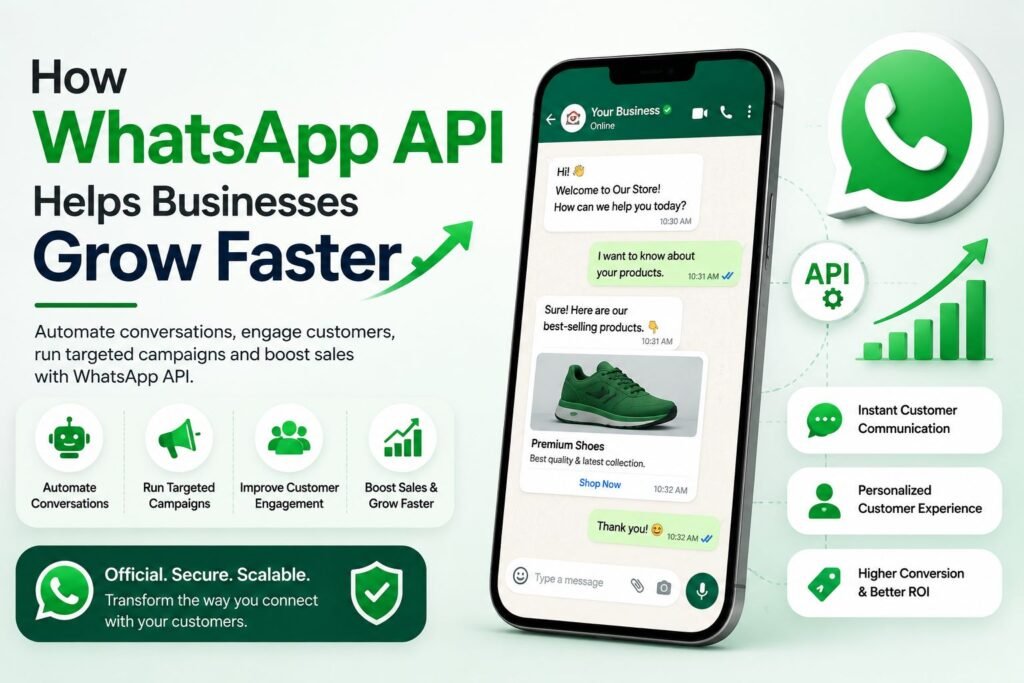
In today’s digital-first business environment, customers expect quick responses, convenient communication, and personalized interactions. Businesses that are slow to respond or rely on outdated communication methods can easily lose potential customers to competitors. WhatsApp API provides businesses with a powerful way to communicate with customers at scale. By connecting WhatsApp with business systems, CRM platforms, chatbots, and marketing tools, companies can automate conversations, send timely notifications, engage customers, and improve their overall communication strategy. 1. Reach Customers Where They Already Are WhatsApp is already widely used for everyday communication. Instead of asking customers to download another application or visit a complicated communication portal, businesses can connect with them through a familiar platform. Using WhatsApp API, businesses can communicate with customers regarding enquiries, orders, appointments, updates, support requests, and promotional campaigns. This makes communication more convenient and accessible. 2. Automate Customer Communication Responding manually to every customer message can become difficult as a business grows. WhatsApp API allows businesses to automate many repetitive conversations. Automated messages can be used for welcome messages, order confirmations, appointment reminders, payment notifications, delivery updates, FAQs, and other routine communication. Automation saves time for employees while ensuring customers receive important information without unnecessary delays. 3. Improve Customer Support Fast customer support can have a direct impact on customer satisfaction. Customers often expect businesses to respond quickly when they have questions or problems. WhatsApp API can be integrated with automated workflows and chatbots to provide instant responses to common questions. Customers can receive information about products, services, pricing, availability, order status, and more without waiting for a support representative. For more complex issues, conversations can be transferred to a human support team. 4. Generate and Nurture Leads WhatsApp is also an effective channel for lead generation. Businesses can encourage website visitors, social media users, or campaign audiences to start a conversation directly on WhatsApp. Once a potential customer connects, automated workflows can collect basic information, understand their requirements, and guide them toward the appropriate product or service. Businesses can then follow up with qualified leads and move them further through the sales process. 5. Run Targeted Marketing Campaigns WhatsApp API allows businesses to communicate with customers through targeted campaigns. Instead of sending the same message to everyone, businesses can organize audiences based on their interests, customer history, or previous interactions. For example, an online store can send product updates to previous buyers, while a service company can send relevant offers to customers who previously showed interest in a particular service. Targeted communication can make marketing more relevant and improve customer engagement. 6. Send Important Notifications Not every WhatsApp message needs to be promotional. Businesses can also use the API for essential transactional notifications. These can include: Providing timely information helps customers stay informed and reduces the need for them to contact support for basic updates. 7. Connect WhatsApp With Business Systems One of the biggest advantages of WhatsApp API is its ability to integrate with other business tools. Businesses can connect WhatsApp with CRM systems, websites, e-commerce platforms, customer databases, payment systems, and automation tools. This allows customer interactions to become part of a broader business workflow. For example, when a customer submits an enquiry through a website, the information can be added to the CRM and an automated WhatsApp message can be triggered immediately. 8. Personalize Customer Experiences Customers respond better when communication feels relevant to their needs. WhatsApp API can help businesses create personalized communication based on available customer information and interaction history. Businesses can send relevant recommendations, reminders, updates, and follow-up messages instead of relying only on generic communication. Personalization can help businesses build stronger customer relationships and encourage repeat engagement. 9. Increase Sales Opportunities WhatsApp can shorten the distance between customer interest and purchase. A potential customer can ask a question, receive product information, discuss requirements, and get assistance without leaving the conversation. Businesses can also use automated follow-ups to reconnect with customers who showed interest but did not complete a purchase. This makes WhatsApp a useful channel not only for communication but also for supporting the sales journey. 10. Scale Communication Efficiently As businesses grow, their customer communication requirements grow as well. Hiring additional employees to manually handle every conversation may not always be practical. WhatsApp API allows businesses to automate repetitive interactions while keeping human agents available for conversations that require personal attention. This combination of automation and human support helps businesses handle a larger volume of customer interactions more efficiently. Conclusion WhatsApp API is more than just a messaging solution. It can become an important part of a modern business communication and marketing strategy. From automated customer support and targeted campaigns to lead generation, notifications, CRM integration, and personalized communication, WhatsApp API helps businesses connect with customers more efficiently. When implemented properly, it can reduce repetitive work, improve response times, strengthen customer relationships, and create more opportunities for sales and business growth. For businesses looking to scale their communication while maintaining a convenient customer experience, WhatsApp API can be a powerful digital solution.

Blog

How School ERP Simplifies Modern School Management

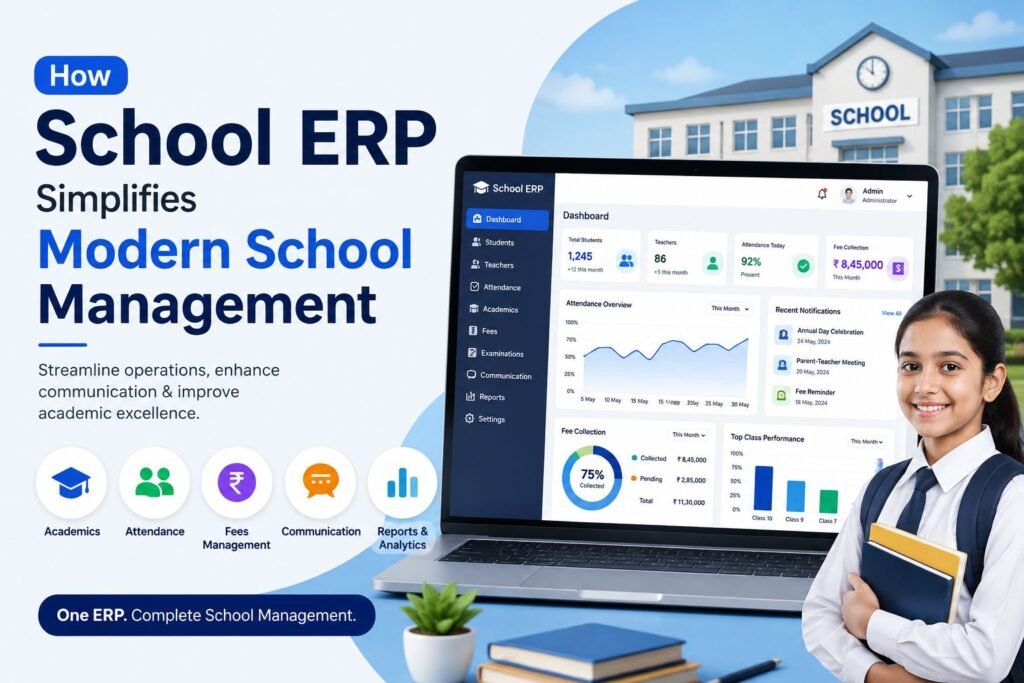
Managing a modern school involves much more than teaching students in classrooms. Schools handle admissions, student records, attendance, examinations, fees, communication, staff management, transportation, library operations, and many other daily activities. Managing all these processes manually or through separate systems can become time-consuming and difficult to maintain. A School ERP (Enterprise Resource Planning) system brings these activities together on a single centralized platform. It helps schools automate routine tasks, organize information, improve communication, and provide management with better visibility into daily operations. 1. Centralized Student Information One of the biggest advantages of School ERP software is centralized student information management. Instead of maintaining multiple registers, spreadsheets, and separate records, schools can store student details in one organized system. Information such as personal details, academic records, attendance, examination results, fee history, assignments, and other relevant information can be accessed according to user permissions. This reduces duplicate data entry and makes it easier for authorized staff to find accurate information whenever required. 2. Simplified Attendance Management Taking and maintaining attendance is a regular responsibility for teachers and administrative staff. Traditional attendance registers can take considerable time and make reporting difficult. With a School ERP, teachers can record attendance digitally and schools can generate attendance reports quickly. Parents can also receive relevant attendance updates, while management can monitor attendance trends across classes and students. This makes the process more organized while reducing paperwork and manual calculations. 3. Efficient Academic Management Academic management involves lesson planning, class schedules, assignments, examinations, results, and learning resources. Managing each activity separately can create unnecessary administrative work. School ERP software provides tools that help teachers plan lessons, manage assignments, organize examinations, record marks, and share academic information. Students can access relevant learning materials and assignments, while parents can stay informed about their child’s academic progress. As a result, teachers can spend less time handling administrative work and more time focusing on teaching. 4. Better Fee and Financial Management Fee collection is another important part of school administration. Managing fee records manually can lead to calculation errors, missed payments, and difficulties in tracking outstanding amounts. A School ERP can maintain detailed fee records, generate invoices or receipts, track pending payments, and provide useful financial reports. Parents can also receive payment reminders and access relevant fee information. For management, centralized financial data makes it easier to understand collections, pending payments, and overall fee-related activity. 5. Improved Communication Effective communication between schools, teachers, students, and parents is essential. Important announcements can easily get missed when communication depends entirely on printed notices or individual messages. School ERP platforms can provide centralized communication through notifications, SMS, email, mobile applications, or integrated messaging solutions. Schools can share announcements, examination updates, attendance information, homework, events, and other important notices more efficiently. This creates a stronger connection between the school and its stakeholders. 6. Simplified Staff Management School administration also needs to manage teachers and other employees. Staff information, attendance, leave requests, payroll, tasks, and other records can become difficult to maintain when handled manually. A School ERP can bring these processes into one system. Authorized administrators can manage employee information, monitor attendance, process leave requests, and access staff-related reports from a centralized dashboard. This reduces repetitive administrative work and helps the management team maintain better control over staff operations. 7. Reports and Real-Time Insights School management needs accurate information to make effective decisions. Collecting data from different departments manually can make reporting slow and unreliable. With an ERP system, information from different modules can be combined to generate structured reports. Management can review attendance, academic performance, fee collection, staff activity, admissions, transportation, and other operational data from centralized dashboards. These insights help administrators identify issues faster and make informed decisions based on current information. 8. Role-Based Access and Security A school has different types of users, including administrators, teachers, students, parents, accountants, and management. Not every user should have access to the same information. Modern School ERP systems can provide role-based access, ensuring users see the features and information relevant to their responsibilities. For example, teachers can manage academic activities, parents can view their child’s information, and administrators can access broader operational data. This improves both usability and data security. 9. Less Paperwork and More Automation One of the main goals of implementing School ERP software is reducing repetitive manual work. Tasks such as generating reports, maintaining records, sending notifications, calculating fees, and preparing attendance summaries can be streamlined through automation. Reducing paperwork not only saves time but also helps schools maintain more organized digital records. Staff can focus their attention on activities that require human interaction and decision-making rather than repetitive administrative processes. 10. A Better Experience for Everyone A well-designed School ERP does not only benefit school management. It creates value for everyone involved in the education ecosystem. Teachers get easier tools for managing classes, attendance, assignments, and academic activities.Students can access learning resources, assignments, schedules, and academic information.Parents can stay informed about attendance, fees, results, notices, and school activities.Management gets centralized data, reports, and insights for better decision-making. By connecting these different stakeholders through one platform, schools can create a more transparent and efficient management environment. Conclusion Modern schools need efficient systems to manage their growing academic and administrative responsibilities. A School ERP simplifies this process by bringing essential operations together on one centralized platform. From student information and attendance to academics, fees, communication, staff management, and reporting, ERP software can reduce manual work and improve operational efficiency. It also gives teachers, parents, students, and management access to the information they need in a structured and convenient way. As schools continue adopting digital solutions, School ERP software is becoming an important tool for creating smarter, more connected, and more efficient school management.

Scroll to Top